


The Interiors
The restoration of the Thomas Day House’s interior reflects the same level of care and craftsmanship devoted to its reconstruction and exterior detailing. Signature elements of Day’s design, such as his spiral-shaped newel posts, are prominently featured in the staircases, while each wood plank and paint color was thoughtfully selected to showcase the home’s 19th-century character.
Beyond his celebrated work as a furniture maker, Day’s skill as a master woodworker extended to architectural carpentry. This is especially evident in features like the staircases, which showcase both his technical precision and his distinctive style.
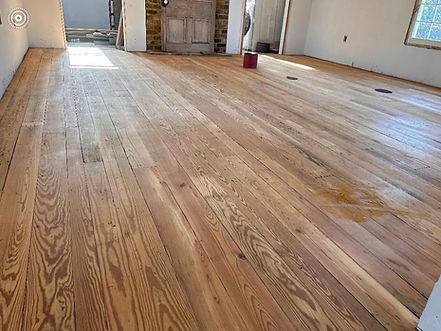
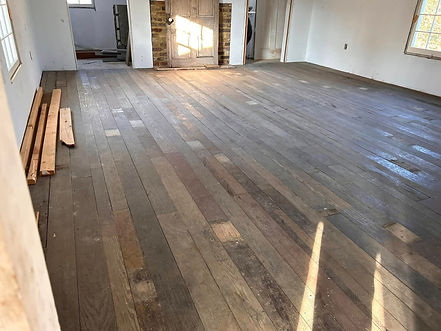
Over 2000 square feet of 200 year old long-leaf pine floor boards and stair treads were removed over 25 years ago and re-installed and sanded. Many of these planks had warped and required expert carpentry to install and sand them. The original wood baseboards and handrails were added shortly after this.
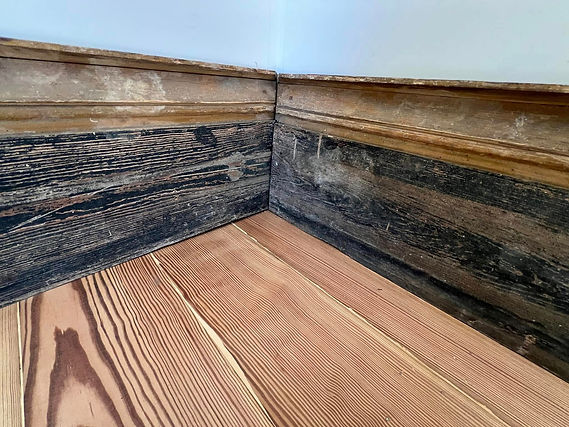
The original baseboards in the primary bedroom. This is the original 1836 black paint with a gold/ honey color cap.
All original trim—from the mantels and baseboards to the doors and windows—was carefully preserved and reinstalled throughout the house. The long-leaf pine selected in 1827 and 1836 for the staircases, including the treads and risers, were also reclaimed and installed.
Authentic square-head nails were used in constructing the staircase and even the blue paint color was a historically accurate design choice that makes the interior of the Thomas Day House so unique.
Below, notice the rings on the (left) forced growth pine today compared to a trim block from 1835 (right). All of the timber used to build the house came from long-leaf pines from the land where the house was built in 1827 and 1835/36.
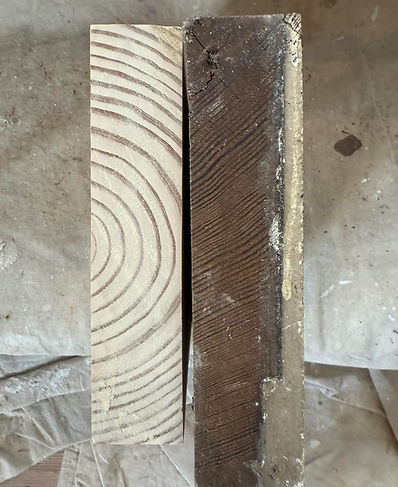
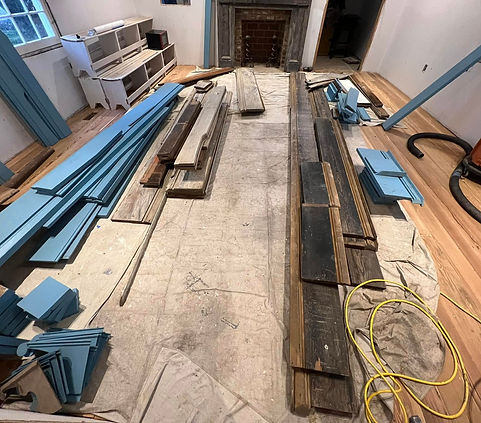
Original long-leaf pine boards (right).
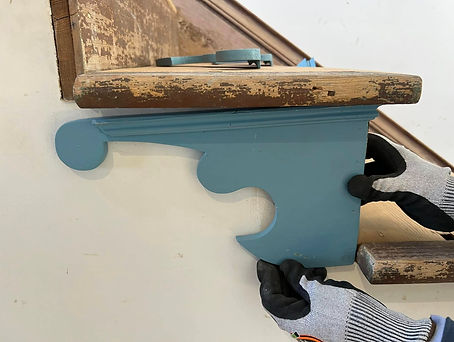
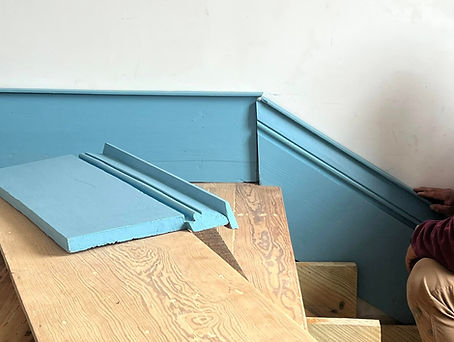
Example of Day's iconic line-work in the decorative stair trim.